Building comparison
head to head
9 Clues: The Secret of Serpent CreekvsUnpacking
Neither is meaningfully harder - they pose close to the same test. The widest gap is variance, and it is a single point.

9 Clues: The Secret of Serpent Creek
Optimization · Pure Optimization
A hidden-object mystery about searching scenes and solving puzzles to crack a case.
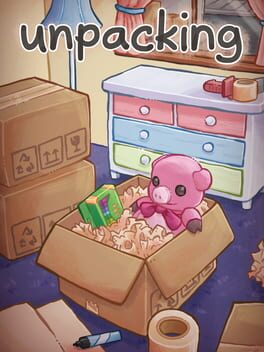
Unpacking
Optimization · Pure Optimization
A zen object-placement game where reading spatial and narrative context determines where each item belongs.
9 Clues: The Secret of Serpent Creek leans Optimization (Pure Optimization); Unpacking leans Optimization (Pure Optimization).
9 Clues: The Secret of Serpent CreekUnpacking
Axis by axis
Execution1 vs 1
Same score on execution - which means the number cannot separate them. The difference is in what each one asks of you.
9 Clues: The Secret of Serpent Creek
Clicking hidden objects needs only patience
Unpacking
Item placement requires light spatial judgment but no precision
Reads0 vs 0
Same score on reads - which means the number cannot separate them. The difference is in what each one asks of you.
9 Clues: The Secret of Serpent Creek
No adaptive opponent in a casual mystery
Unpacking
Solo meditative game with no opponent
Variance2 vs 1
9 Clues: The Secret of Serpent Creek leans a little harder on variance, though the gap is small.
9 Clues: The Secret of Serpent Creek
Object and clue locations hidden until found
Unpacking
Item and room combinations are deterministic across playthroughs
Optimization5 vs 5
Same score on optimization - which means the number cannot separate them. The difference is in what each one asks of you.
9 Clues: The Secret of Serpent Creek
Working through puzzles and deductions is the loop
Unpacking
Understanding acceptable placement rules and story logic guides packing decisions
A matching score does not mean a matching test. Two games can both sit at 10 on execution and demand completely different things of you - which is why the reasoning above matters more than the number beside it.