Building comparison
head to head
Bust-a-Move 4vsSplit Fiction
Neither is meaningfully harder - they pose close to the same test. The widest gap is variance, and it is a single point.
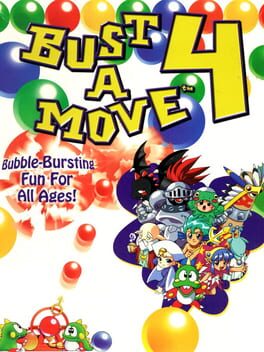
Bust-a-Move 4
Execution · Practiced Mastery
Aiming banked bubble shots quickly while planning chain clears.

Split Fiction
Execution · Practiced Mastery
A co-op adventure that relentlessly cycles through genres, demanding precise execution and partner synchronisation in each new mechanical context.
Bust-a-Move 4 leans Execution (Practiced Mastery); Split Fiction leans Execution (Practiced Mastery).
Bust-a-Move 4Split Fiction
Axis by axis
Execution6 vs 6
Same score on execution - which means the number cannot separate them. The difference is in what each one asks of you.
Bust-a-Move 4
Precise bubble aiming and bank shots under time pressure
Split Fiction
Constant mechanical shifts demand fast adaptation and precise inputs
Reads2 vs 2
Same score on reads - which means the number cannot separate them. The difference is in what each one asks of you.
Bust-a-Move 4
Versus mode allows mild human pressure timing
Split Fiction
Co-op partner coordination involves light social reads
Variance3 vs 2
Bust-a-Move 4 leans a little harder on variance, though the gap is small.
Bust-a-Move 4
Bubble colour feed is random but bounded
Split Fiction
Genre-shifting levels introduce some unknown obstacles per run
Optimization5 vs 5
Same score on optimization - which means the number cannot separate them. The difference is in what each one asks of you.
Bust-a-Move 4
Clearing patterns and pulley setups have known solutions
Split Fiction
Each world's mechanics reward mastering the optimal movement path
A matching score does not mean a matching test. Two games can both sit at 10 on execution and demand completely different things of you - which is why the reasoning above matters more than the number beside it.