Building comparison
head to head
Chivalry: Medieval WarfarevsUnder Night In-Birth Exe:Late[st]
Neither is meaningfully harder - they pose close to the same test. The widest gap is variance, and it is a single point.
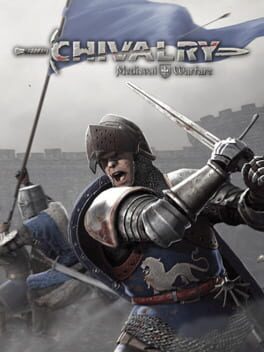
Chivalry: Medieval Warfare
Execution · Competitive PvP
First-person medieval melee where feints and drags duel human reads.
![Under Night In-Birth Exe:Late[st] cover art](https://images.igdb.com/igdb/image/upload/t_cover_big/co1na0.jpg)
Under Night In-Birth Exe:Late[st]
Execution · Competitive PvP
An anime fighter testing execution precision and live prediction around its GRD tug-of-war.
Chivalry: Medieval Warfare leans Execution (Competitive PvP); Under Night In-Birth Exe:Late[st] leans Execution (Competitive PvP).
Chivalry: Medieval WarfareUnder Night In-Birth Exe:Late[st]
Axis by axis
Execution8 vs 8
Same score on execution - which means the number cannot separate them. The difference is in what each one asks of you.
Chivalry: Medieval Warfare
Swing manipulation, footwork, and parry timing
Under Night In-Birth Exe:Late[st]
Combo routes and GRD-cycle timing demand precise hands
Reads7 vs 7
Same score on reads - which means the number cannot separate them. The difference is in what each one asks of you.
Chivalry: Medieval Warfare
Feints and drags against adapting humans
Under Night In-Birth Exe:Late[st]
Human opponents adapt around the GRD mind-game constantly
Variance2 vs 1
Chivalry: Medieval Warfare leans a little harder on variance, though the gap is small.
Chivalry: Medieval Warfare
Battlefield chaos with many players
Under Night In-Birth Exe:Late[st]
Deterministic systems leave nothing to chance
Optimization4 vs 5
Under Night In-Birth Exe:Late[st] leans a little harder on optimization, though the gap is small.
Chivalry: Medieval Warfare
Class loadouts and objective knowledge
Under Night In-Birth Exe:Late[st]
Frame data, GRD theory and matchup study underpin everything
A matching score does not mean a matching test. Two games can both sit at 10 on execution and demand completely different things of you - which is why the reasoning above matters more than the number beside it.
Related comparisons
Call of Duty: Modern Warfare 2 vs Chivalry: Medieval WarfareCall of Duty: Modern Warfare 2 vs Under Night In-Birth Exe:Late[st]Chivalry: Medieval Warfare vs Counter-Strike: Global OffensiveCounter-Strike: Global Offensive vs Under Night In-Birth Exe:Late[st]Call of Duty: Black Ops vs Chivalry: Medieval WarfareCall of Duty: Black Ops vs Under Night In-Birth Exe:Late[st]