Building comparison
head to head
Farthest FrontiervsTotally Accurate Battle Simulator
Neither is meaningfully harder - they pose close to the same test. The widest gap is optimization, and it is a single point.

Farthest Frontier
Optimization · Pure Optimization
Building a frontier settlement where food diversity, disease prevention, and defensive layout must be solved simultaneously.
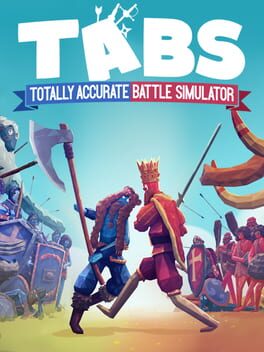
Totally Accurate Battle Simulator
Optimization · Systems & Chaos
A physics sandbox where you place wobbly armies and watch ragdoll battles resolve themselves.
Farthest Frontier leans Optimization (Pure Optimization); Totally Accurate Battle Simulator leans Optimization (Systems & Chaos).
Farthest FrontierTotally Accurate Battle Simulator
Axis by axis
Execution1 vs 1
Same score on execution - which means the number cannot separate them. The difference is in what each one asks of you.
Farthest Frontier
All construction and assignment decisions are deliberate and pauseable
Totally Accurate Battle Simulator
Place units then watch; no hands required
Reads0 vs 0
Same score on reads - which means the number cannot separate them. The difference is in what each one asks of you.
Farthest Frontier
Raider and animal threats follow scripted spawn rules
Totally Accurate Battle Simulator
No adaptive opponent in campaign sandbox
Variance5 vs 5
Same score on variance - which means the number cannot separate them. The difference is in what each one asks of you.
Farthest Frontier
Disease outbreaks, wild animal raids, and harvest yields add uncertainty
Totally Accurate Battle Simulator
Wobbly physics makes identical setups resolve differently
Optimization8 vs 7
Farthest Frontier leans a little harder on optimization, though the gap is small.
Farthest Frontier
Crop rotation, food variety, and building placement are deeply solvable
Totally Accurate Battle Simulator
Unit counters and placement solve each scenario
A matching score does not mean a matching test. Two games can both sit at 10 on execution and demand completely different things of you - which is why the reasoning above matters more than the number beside it.