Building comparison
head to head
Fire Emblem EngagevsFire Emblem: Three Houses
Neither is meaningfully harder - they pose close to the same test. The widest gap is execution, and it is a single point.

Fire Emblem Engage
Optimization · Pure Optimization
Maximizing Emblem synergies and inherited skills to dismantle precisely scripted enemy maps.
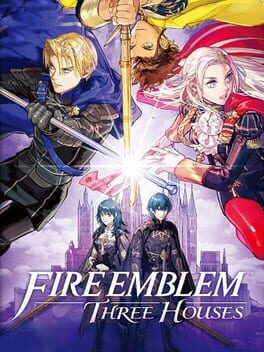
Fire Emblem: Three Houses
Optimization · Pure Optimization
A tactical RPG solved through long-horizon build and class planning.
Fire Emblem Engage leans Optimization (Pure Optimization); Fire Emblem: Three Houses leans Optimization (Pure Optimization).
Fire Emblem EngageFire Emblem: Three Houses
Axis by axis
Execution2 vs 1
Fire Emblem Engage leans a little harder on execution, though the gap is small.
Fire Emblem Engage
Turn-based; Engage ring timing is menu-driven not reactive
Fire Emblem: Three Houses
Menu-driven, no mechanical bar
Reads1 vs 1
Same score on reads - which means the number cannot separate them. The difference is in what each one asks of you.
Fire Emblem Engage
Scripted enemy phases never adapt to player tendencies
Fire Emblem: Three Houses
AI follows fixed aggression rules
Variance4 vs 3
Fire Emblem Engage leans a little harder on variance, though the gap is small.
Fire Emblem Engage
Hit and avoid stats tighten variance; Engage mechanics are reliable
Fire Emblem: Three Houses
Hit rates and crit RNG affect runs
Optimization9 vs 9
Same score on optimization - which means the number cannot separate them. The difference is in what each one asks of you.
Fire Emblem Engage
Emblem pairing, skill inheritance, and unit positioning are exhaustively solvable
Fire Emblem: Three Houses
Class routing and build planning dominates
A matching score does not mean a matching test. Two games can both sit at 10 on execution and demand completely different things of you - which is why the reasoning above matters more than the number beside it.