Building comparison
head to head
Goodbye DeponiavsProfessor Layton and the Curious Village
Neither is meaningfully harder - they pose close to the same test. The widest gap is variance, and it is a single point.
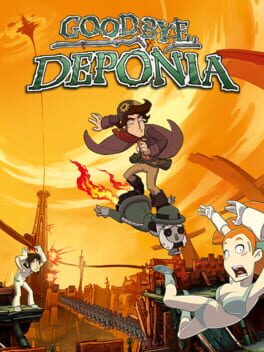
Goodbye Deponia
Optimization · Pure Optimization
The trilogy finale trades puzzle complexity for narrative resolution, testing observation over deduction.
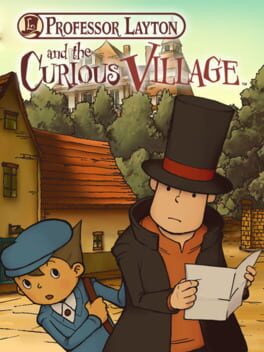
Professor Layton and the Curious Village
Optimization · Pure Optimization
Gentleman puzzler solves a village full of standalone brainteasers.
Goodbye Deponia leans Optimization (Pure Optimization); Professor Layton and the Curious Village leans Optimization (Pure Optimization).
Goodbye DeponiaProfessor Layton and the Curious Village
Axis by axis
Execution1 vs 1
Same score on execution - which means the number cannot separate them. The difference is in what each one asks of you.
Goodbye Deponia
No physical demands on the player
Professor Layton and the Curious Village
Stylus taps only; no dexterity pressure at all
Reads0 vs 0
Same score on reads - which means the number cannot separate them. The difference is in what each one asks of you.
Goodbye Deponia
Scripted finale with no adaptive opponent
Professor Layton and the Curious Village
No opponent, adaptive or otherwise
Variance1 vs 2
Professor Layton and the Curious Village leans a little harder on variance, though the gap is small.
Goodbye Deponia
Fixed narrative outcome with deterministic puzzles
Professor Layton and the Curious Village
Puzzle answers are hidden until reasoned out, then fixed
Optimization7 vs 8
Professor Layton and the Curious Village leans a little harder on optimization, though the gap is small.
Goodbye Deponia
Closure-focused design eases puzzle density compared to predecessors
Professor Layton and the Curious Village
Every brainteaser has one clean solvable answer
A matching score does not mean a matching test. Two games can both sit at 10 on execution and demand completely different things of you - which is why the reasoning above matters more than the number beside it.