Building comparison
head to head
Lovers in a Dangerous SpacetimevsWarhammer 40,000: Kill Team
Neither is meaningfully harder - they pose close to the same test. The widest gap is reads, and it is a single point.
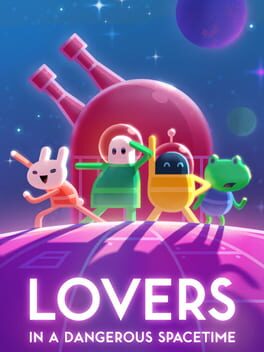
Lovers in a Dangerous Spacetime
Execution · Practiced Mastery
A co-op shoot-em-up where coordinating ship stations and learning enemy patterns determines survival.
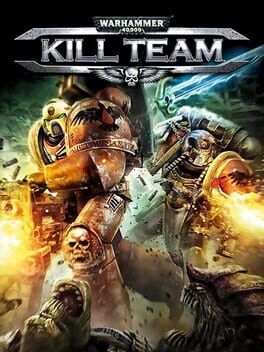
Warhammer 40,000: Kill Team
Execution · Practiced Mastery
A twin-stick action shooter testing aim and crowd control against scripted hordes.
Lovers in a Dangerous Spacetime leans Execution (Practiced Mastery); Warhammer 40,000: Kill Team leans Execution (Practiced Mastery).
Lovers in a Dangerous SpacetimeWarhammer 40,000: Kill Team
Axis by axis
Execution6 vs 6
Same score on execution - which means the number cannot separate them. The difference is in what each one asks of you.
Lovers in a Dangerous Spacetime
Rotating ship stations and aiming cannons requires fast, precise control
Warhammer 40,000: Kill Team
Twin-stick aiming and dodging waves is the action core
Reads1 vs 2
Warhammer 40,000: Kill Team leans a little harder on reads, though the gap is small.
Lovers in a Dangerous Spacetime
No adaptive opponent - enemies follow scripted wave patterns
Warhammer 40,000: Kill Team
Enemy hordes are scripted, not adapting minds
Variance4 vs 3
Lovers in a Dangerous Spacetime leans a little harder on variance, though the gap is small.
Lovers in a Dangerous Spacetime
Enemy waves and power-up drops introduce meaningful randomness
Warhammer 40,000: Kill Team
Enemy spawns and drops add bounded randomness
Optimization5 vs 5
Same score on optimization - which means the number cannot separate them. The difference is in what each one asks of you.
Lovers in a Dangerous Spacetime
Optimal station rotation and shield positioning are learnable strategies
Warhammer 40,000: Kill Team
Class abilities and upgrade paths reward planning
A matching score does not mean a matching test. Two games can both sit at 10 on execution and demand completely different things of you - which is why the reasoning above matters more than the number beside it.
Related comparisons
Grand Theft Auto V vs Lovers in a Dangerous SpacetimeGrand Theft Auto V vs Warhammer 40,000: Kill TeamLovers in a Dangerous Spacetime vs The Witcher 3: Wild HuntThe Witcher 3: Wild Hunt vs Warhammer 40,000: Kill TeamGrand Theft Auto: San Andreas vs Lovers in a Dangerous SpacetimeGrand Theft Auto: San Andreas vs Warhammer 40,000: Kill Team