Building comparison
head to head
Need for Speed IIvsTest Drive 6
Neither is harder. They score identically on all four axes, so the difference between them is in kind, not degree.

Need for Speed II
Execution · Pure Mechanics
Arcade driving that tests cornering execution over a small set of memorisable tracks.
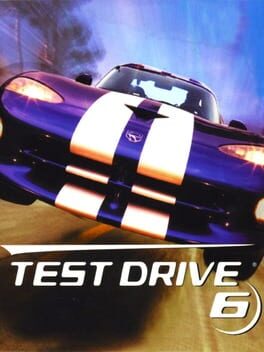
Test Drive 6
Execution · Pure Mechanics
Arcade racing lines and traffic-dodging reflexes on memorisable tracks.
Need for Speed II leans Execution (Pure Mechanics); Test Drive 6 leans Execution (Pure Mechanics).
Need for Speed IITest Drive 6
Axis by axis
Execution7 vs 7
Same score on execution - which means the number cannot separate them. The difference is in what each one asks of you.
Need for Speed II
Cornering and throttle control decide every race
Test Drive 6
Cornering at speed through traffic is the entire challenge
Reads1 vs 1
Same score on reads - which means the number cannot separate them. The difference is in what each one asks of you.
Need for Speed II
AI racers follow rubber-banded scripts, not minds
Test Drive 6
AI racers follow rubber-band scripts, not minds to model
Variance1 vs 1
Same score on variance - which means the number cannot separate them. The difference is in what each one asks of you.
Need for Speed II
Tracks are fixed; nothing meaningful is hidden
Test Drive 6
Traffic adds mild unpredictability to known tracks
Optimization4 vs 4
Same score on optimization - which means the number cannot separate them. The difference is in what each one asks of you.
Need for Speed II
Learning six tracks' racing lines and car choice
Test Drive 6
Learning racing lines and car choice is solvable
A matching score does not mean a matching test. Two games can both sit at 10 on execution and demand completely different things of you - which is why the reasoning above matters more than the number beside it.