Building comparison
head to head
Painkiller (2004)vsTetris DX
Neither is meaningfully harder - they pose close to the same test. The widest gap is execution, and it is a single point.

Painkiller (2004)
Execution · Pure Mechanics
A relentless wave-clearing shooter that tests sustained aim and movement against massive scripted enemy crowds.
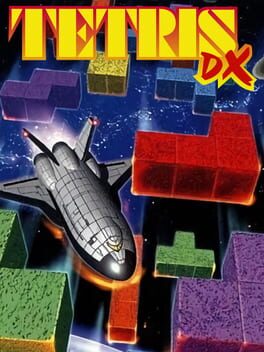
Tetris DX
Execution · Pure Mechanics
Tests perceptual speed and motor execution under accelerating piece gravity.
Painkiller (2004) leans Execution (Pure Mechanics); Tetris DX leans Execution (Pure Mechanics).
Painkiller (2004)Tetris DX
Axis by axis
Execution8 vs 9
Tetris DX leans a little harder on execution, though the gap is small.
Painkiller (2004)
Constant crowd-control movement against overwhelming enemy counts demands fast aim
Tetris DX
Precise placement under accelerating gravity decides every game
Reads0 vs 0
Same score on reads - which means the number cannot separate them. The difference is in what each one asks of you.
Painkiller (2004)
All enemies are scripted waves with fixed attack patterns
Tetris DX
Solo stacking with no opponent to model
Variance2 vs 2
Same score on variance - which means the number cannot separate them. The difference is in what each one asks of you.
Painkiller (2004)
Enemy counts and placements are fixed with minimal unknown elements
Tetris DX
Random pieces are bounded and rapidly mappable
Optimization5 vs 4
Painkiller (2004) leans a little harder on optimization, though the gap is small.
Painkiller (2004)
Tarot card selection and level routing provide a thin solvable layer
Tetris DX
Stacking patterns and scoring strategy are well solved
A matching score does not mean a matching test. Two games can both sit at 10 on execution and demand completely different things of you - which is why the reasoning above matters more than the number beside it.