Building comparison
head to head
Portal 2vsThe Legend of Zelda: Phantom Hourglass
Neither is simply harder - they are hard in different places. Portal 2 demands more optimization; The Legend of Zelda: Phantom Hourglass demands more variance.

Portal 2
Optimization · Pure Optimization
A first-person puzzle game where seeing the solution is the whole skill.
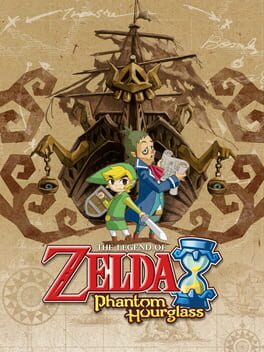
The Legend of Zelda: Phantom Hourglass
Optimization · Pure Optimization
Touch-controlled DS Zelda centered on re-running a timed stealth dungeon ever faster.
Portal 2 leans Optimization (Pure Optimization); The Legend of Zelda: Phantom Hourglass leans Optimization (Pure Optimization).
Portal 2The Legend of Zelda: Phantom Hourglass
Axis by axis
Execution3 vs 3
Same score on execution - which means the number cannot separate them. The difference is in what each one asks of you.
Portal 2
Portal placement requires some precision but timing is lenient.
The Legend of Zelda: Phantom Hourglass
Stylus controls are simple and forgiving
Reads0 vs 0
Same score on reads - which means the number cannot separate them. The difference is in what each one asks of you.
Portal 2
No opponent; puzzles are static.
The Legend of Zelda: Phantom Hourglass
Phantoms patrol fixed routes
Variance0 vs 2
The Legend of Zelda: Phantom Hourglass leans clearly harder on variance.
Portal 2
Puzzles are deterministic with no randomness.
The Legend of Zelda: Phantom Hourglass
Sea exploration unknowns first run
Optimization9 vs 7
Portal 2 leans clearly harder on optimization.
Portal 2
Solving the puzzle's logic IS the entire game.
The Legend of Zelda: Phantom Hourglass
Temple of the Ocean King rewards optimized repeat routing
A matching score does not mean a matching test. Two games can both sit at 10 on execution and demand completely different things of you - which is why the reasoning above matters more than the number beside it.