Building comparison
head to head
StacklandsvsYu-Gi-Oh! Forbidden Memories
Neither is meaningfully harder - they pose close to the same test. The widest gap is execution, and it is a single point.
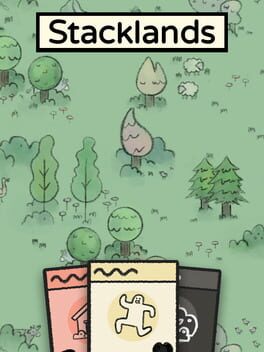
Stacklands
Optimization · Systems & Chaos
A card-stacking village-builder roguelite where efficient resource chain optimisation against draw randomness is the test.

Yu-Gi-Oh! Forbidden Memories
Optimization · Systems & Chaos
The cult PS1 card game where memorising obscure fusions beats grinding for drops.
Stacklands leans Optimization (Systems & Chaos); Yu-Gi-Oh! Forbidden Memories leans Optimization (Systems & Chaos).
StacklandsYu-Gi-Oh! Forbidden Memories
Axis by axis
Execution1 vs 0
Stacklands leans a little harder on execution, though the gap is small.
Stacklands
Card dragging in real time has minimal precision demands
Yu-Gi-Oh! Forbidden Memories
Menu-driven duels
Reads0 vs 0
Same score on reads - which means the number cannot separate them. The difference is in what each one asks of you.
Stacklands
Enemies and events are scripted; no adaptive adversary
Yu-Gi-Oh! Forbidden Memories
AI opponents are fully mappable
Variance6 vs 7
Yu-Gi-Oh! Forbidden Memories leans a little harder on variance, though the gap is small.
Stacklands
Card pack draws control which resource chains become available
Yu-Gi-Oh! Forbidden Memories
Card drops and draws gate everything
Optimization8 vs 8
Same score on optimization - which means the number cannot separate them. The difference is in what each one asks of you.
Stacklands
Resource chain optimisation and stacking sequences form the deep game
Yu-Gi-Oh! Forbidden Memories
Memorising fusion combinations is the real game
A matching score does not mean a matching test. Two games can both sit at 10 on execution and demand completely different things of you - which is why the reasoning above matters more than the number beside it.