Building comparison
head to head
Super Paper MariovsTiny Brains
Neither is meaningfully harder - they pose close to the same test. The widest gap is execution, and it is a single point.
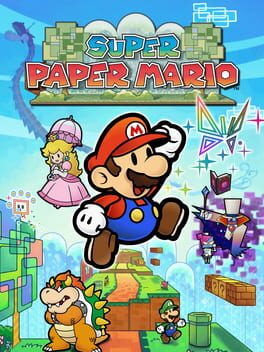
Super Paper Mario
Optimization · Practiced Mastery
A puzzle-leaning platformer testing perspective-flip problem solving more than reflexes.
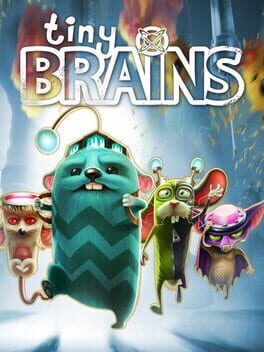
Tiny Brains
Optimization · Pure Optimization
Co-op physics puzzles solved by combining four characters' distinct powers.
Super Paper Mario leans Optimization (Practiced Mastery); Tiny Brains leans Optimization (Pure Optimization).
Super Paper MarioTiny Brains
Axis by axis
Execution4 vs 3
Super Paper Mario leans a little harder on execution, though the gap is small.
Super Paper Mario
Light platforming demands, well below mainline Mario
Tiny Brains
Light physics handling, occasionally timed sections
Reads0 vs 0
Same score on reads - which means the number cannot separate them. The difference is in what each one asks of you.
Super Paper Mario
Enemies follow simple fixed patterns, no adaptation
Tiny Brains
No adversary - the puzzle is the opponent
Variance1 vs 1
Same score on variance - which means the number cannot separate them. The difference is in what each one asks of you.
Super Paper Mario
Dimension-flip secrets are scripted-but-unknown until found
Tiny Brains
Puzzle rooms are fixed once seen
Optimization6 vs 7
Tiny Brains leans a little harder on optimization, though the gap is small.
Super Paper Mario
Solving levels via the 2D/3D flip mechanic is the core test
Tiny Brains
Combining four powers into solutions is the whole test
A matching score does not mean a matching test. Two games can both sit at 10 on execution and demand completely different things of you - which is why the reasoning above matters more than the number beside it.