Building comparison
head to head
Baldur's Gate II: Shadows of AmnvsHonkai: Star Rail
Neither is meaningfully harder - they pose close to the same test. The widest gap is optimization, and it is a single point.
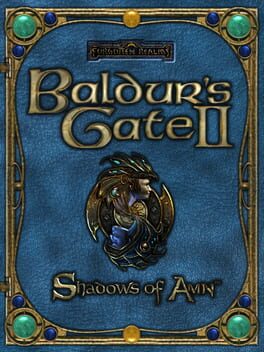
Baldur's Gate II: Shadows of Amn
Optimization · Pure Optimization
The deepest optimization puzzle in the Infinity Engine lineage, rewarding encyclopedic knowledge of 2nd Edition AD&D systems.

Honkai: Star Rail
Optimization · Pure Optimization
A turn-based RPG where relic substat variance and speed-tuned team optimisation define endgame performance.
Baldur's Gate II: Shadows of Amn leans Optimization (Pure Optimization); Honkai: Star Rail leans Optimization (Pure Optimization).
Baldur's Gate II: Shadows of AmnHonkai: Star Rail
Axis by axis
Execution2 vs 2
Same score on execution - which means the number cannot separate them. The difference is in what each one asks of you.
Baldur's Gate II: Shadows of Amn
Pause-and-plan removes twitch entirely; micro-placement has marginal value
Honkai: Star Rail
Turn-based; physical input precision is essentially irrelevant
Reads1 vs 1
Same score on reads - which means the number cannot separate them. The difference is in what each one asks of you.
Baldur's Gate II: Shadows of Amn
Enemies run scripted behaviour patterns, never modelling your tactics
Honkai: Star Rail
PvE only with scripted enemy behaviour throughout
Variance5 vs 5
Same score on variance - which means the number cannot separate them. The difference is in what each one asks of you.
Baldur's Gate II: Shadows of Amn
Loot randomization and enemy ability use create hidden-information layers
Honkai: Star Rail
Relic substat RNG and gacha pulls drive character progression
Optimization10 vs 9
Baldur's Gate II: Shadows of Amn leans a little harder on optimization, though the gap is small.
Baldur's Gate II: Shadows of Amn
Mage spell sequences, dual-class builds and Spellhold routing define mastery
Honkai: Star Rail
Speed tuning, team cycle theory, and buff windows are deeply solvable
A matching score does not mean a matching test. Two games can both sit at 10 on execution and demand completely different things of you - which is why the reasoning above matters more than the number beside it.