Building comparison
head to head
CreatevsThe Legend of Zelda: Phantom Hourglass
Neither is meaningfully harder - they pose close to the same test. The widest gap is execution, and it is a single point.

Create
Optimization · Pure Optimization
A physics puzzle game about placing objects to solve spatial challenges.
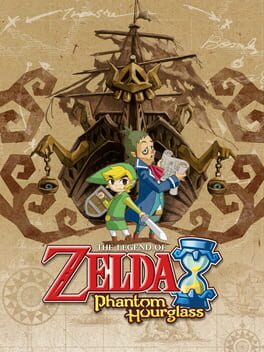
The Legend of Zelda: Phantom Hourglass
Optimization · Pure Optimization
Touch-controlled DS Zelda centered on re-running a timed stealth dungeon ever faster.
Create leans Optimization (Pure Optimization); The Legend of Zelda: Phantom Hourglass leans Optimization (Pure Optimization).
CreateThe Legend of Zelda: Phantom Hourglass
Axis by axis
Execution2 vs 3
The Legend of Zelda: Phantom Hourglass leans a little harder on execution, though the gap is small.
Create
Placing objects has no timing demand
The Legend of Zelda: Phantom Hourglass
Stylus controls are simple and forgiving
Reads0 vs 0
Same score on reads - which means the number cannot separate them. The difference is in what each one asks of you.
Create
No adaptive opponent
The Legend of Zelda: Phantom Hourglass
Phantoms patrol fixed routes
Variance1 vs 2
The Legend of Zelda: Phantom Hourglass leans a little harder on variance, though the gap is small.
Create
Physics deterministic and predictable
The Legend of Zelda: Phantom Hourglass
Sea exploration unknowns first run
Optimization7 vs 7
Same score on optimization - which means the number cannot separate them. The difference is in what each one asks of you.
Create
Finding object placements that solve spatial puzzles is the loop
The Legend of Zelda: Phantom Hourglass
Temple of the Ocean King rewards optimized repeat routing
A matching score does not mean a matching test. Two games can both sit at 10 on execution and demand completely different things of you - which is why the reasoning above matters more than the number beside it.