Building comparison
head to head
Goose Goose DuckvsTabletop Simulator
Goose Goose Duck asks more than Tabletop Simulator, and the gap is reads.
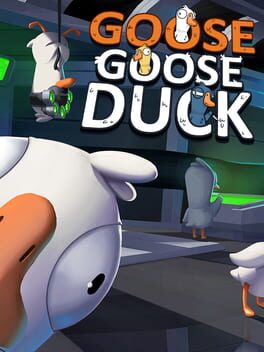
Goose Goose Duck
Reads · Pure Mind Games
A social deduction party game where identifying adaptive liars amid chaos is the core test.
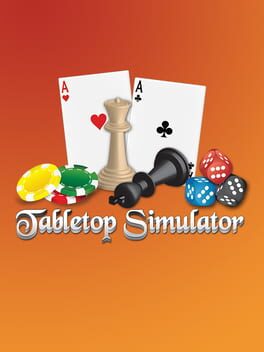
Tabletop Simulator
Reads · Bluff & Deduction
A physics sandbox whose actual skill test is whatever board game you load into it.
Goose Goose Duck leans Reads (Pure Mind Games); Tabletop Simulator leans Reads (Bluff & Deduction).
Goose Goose DuckTabletop Simulator
Axis by axis
Execution1 vs 1
Same score on execution - which means the number cannot separate them. The difference is in what each one asks of you.
Goose Goose Duck
Movement tasks require no meaningful physical skill
Tabletop Simulator
Fiddly physics manipulation, never a skill ceiling
Reads9 vs 4
Goose Goose Duck leans clearly harder on reads.
Goose Goose Duck
Reading and deceiving human imposters is the entire game
Tabletop Simulator
Depends entirely on the tabletop game played with humans
Variance3 vs 4
Tabletop Simulator leans a little harder on variance, though the gap is small.
Goose Goose Duck
Role distribution and map variation create run-level variety
Tabletop Simulator
Dice and shuffled decks supply whatever randomness the game has
Optimization2 vs 3
Tabletop Simulator leans a little harder on optimization, though the gap is small.
Goose Goose Duck
Limited solvable systems beyond the human-prediction layer
Tabletop Simulator
Strategy lives in the hosted game, not the simulator
A matching score does not mean a matching test. Two games can both sit at 10 on execution and demand completely different things of you - which is why the reasoning above matters more than the number beside it.