Building comparison
head to head
Kirby's Return to Dream LandvsThe Simpsons: Hit & Run
Neither is meaningfully harder - they pose close to the same test. The widest gap is execution, and it is a single point.
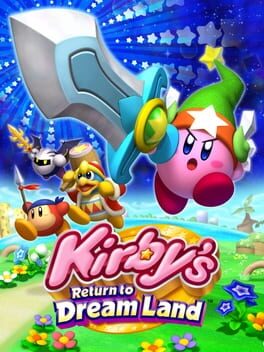
Kirby's Return to Dream Land
Optimization · Practiced Mastery
A four-player Wii Kirby romp gathering ship parts for the stranded alien Magolor.
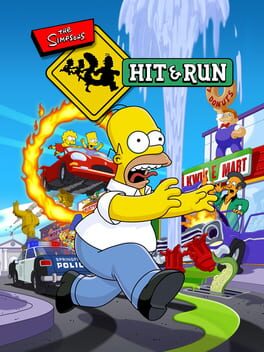
The Simpsons: Hit & Run
Optimization · Practiced Mastery
A family-friendly open-world driving adventure romping through Springfield's mystery of cameras and cola.
Kirby's Return to Dream Land leans Optimization (Practiced Mastery); The Simpsons: Hit & Run leans Optimization (Practiced Mastery).
Kirby's Return to Dream LandThe Simpsons: Hit & Run
Axis by axis
Execution3 vs 4
The Simpsons: Hit & Run leans a little harder on execution, though the gap is small.
Kirby's Return to Dream Land
Easygoing main game; EX mode adds modest demands
The Simpsons: Hit & Run
Forgiving driving and light platforming
Reads0 vs 0
Same score on reads - which means the number cannot separate them. The difference is in what each one asks of you.
Kirby's Return to Dream Land
Bosses are pattern-scripted
The Simpsons: Hit & Run
No adaptive opposition exists
Variance1 vs 1
Same score on variance - which means the number cannot separate them. The difference is in what each one asks of you.
Kirby's Return to Dream Land
Energy sphere hiding spots are static secrets
The Simpsons: Hit & Run
Fixed missions with trivial traffic noise
Optimization4 vs 5
The Simpsons: Hit & Run leans a little harder on optimization, though the gap is small.
Kirby's Return to Dream Land
Super ability timing and sphere collection are solvable
The Simpsons: Hit & Run
Mission routes, shortcuts, and collectible runs are solvable
A matching score does not mean a matching test. Two games can both sit at 10 on execution and demand completely different things of you - which is why the reasoning above matters more than the number beside it.
Related comparisons
Grand Theft Auto V vs Kirby's Return to Dream LandGrand Theft Auto V vs The Simpsons: Hit & RunKirby's Return to Dream Land vs The Witcher 3: Wild HuntThe Simpsons: Hit & Run vs The Witcher 3: Wild HuntGrand Theft Auto: San Andreas vs Kirby's Return to Dream LandGrand Theft Auto: San Andreas vs The Simpsons: Hit & Run