Building comparison
head to head
Momodora: Reverie Under the MoonlightvsStrider (2014)
Neither is harder. They score identically on all four axes, so the difference between them is in kind, not degree.

Momodora: Reverie Under the Moonlight
Execution · Practiced Mastery
A compact, elegant metroidvania with crisp leaf-blade combat and punishing bosses.
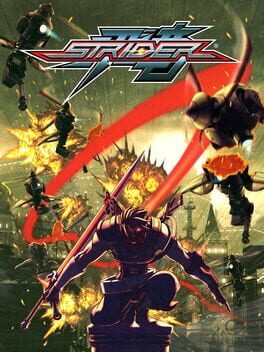
Strider (2014)
Execution · Practiced Mastery
A speed-focused reboot where Hiryu carves through a metroidvania Kazakh City nonstop.
Momodora: Reverie Under the Moonlight leans Execution (Practiced Mastery); Strider (2014) leans Execution (Practiced Mastery).
Momodora: Reverie Under the MoonlightStrider (2014)
Axis by axis
Execution7 vs 7
Same score on execution - which means the number cannot separate them. The difference is in what each one asks of you.
Momodora: Reverie Under the Moonlight
Tight dodge-roll combat and demanding bosses
Strider (2014)
Relentless slash-dash mobility and reflex combat
Reads1 vs 1
Same score on reads - which means the number cannot separate them. The difference is in what each one asks of you.
Momodora: Reverie Under the Moonlight
All bosses run fixed movesets
Strider (2014)
Scripted enemies and set-piece bosses
Variance1 vs 1
Same score on variance - which means the number cannot separate them. The difference is in what each one asks of you.
Momodora: Reverie Under the Moonlight
Compact fixed world, few unknowns
Strider (2014)
Fixed world, minor secret hunting
Optimization5 vs 5
Same score on optimization - which means the number cannot separate them. The difference is in what each one asks of you.
Momodora: Reverie Under the Moonlight
Learning boss patterns and item routing
Strider (2014)
Upgrade routing and boss pattern learning
A matching score does not mean a matching test. Two games can both sit at 10 on execution and demand completely different things of you - which is why the reasoning above matters more than the number beside it.
Related comparisons
Grand Theft Auto V vs Momodora: Reverie Under the MoonlightGrand Theft Auto V vs Strider (2014)Momodora: Reverie Under the Moonlight vs The Witcher 3: Wild HuntStrider (2014) vs The Witcher 3: Wild HuntGrand Theft Auto: San Andreas vs Momodora: Reverie Under the MoonlightGrand Theft Auto: San Andreas vs Strider (2014)