Building comparison
head to head
Pokémon Mystery Dungeon: Red Rescue TeamvsThe Long Dark
Neither is meaningfully harder - they pose close to the same test. The widest gap is execution, and it is a single point.
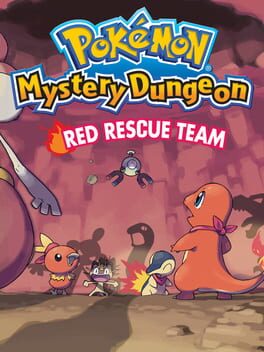
Pokémon Mystery Dungeon: Red Rescue Team
Variance · Systems & Chaos
Turn-based resource management through randomly generated dungeon layouts.

The Long Dark
Optimization · Systems & Chaos
Planning movement and resource routes across randomised wilderness weather against condition decay.
Pokémon Mystery Dungeon: Red Rescue Team leans Variance (Systems & Chaos); The Long Dark leans Optimization (Systems & Chaos).
Pokémon Mystery Dungeon: Red Rescue TeamThe Long Dark
Axis by axis
Execution1 vs 2
The Long Dark leans a little harder on execution, though the gap is small.
Pokémon Mystery Dungeon: Red Rescue Team
Turn-based grid movement - no twitch demands
The Long Dark
Rifle aim and wolf struggles need minimal twitch
Reads0 vs 0
Same score on reads - which means the number cannot separate them. The difference is in what each one asks of you.
Pokémon Mystery Dungeon: Red Rescue Team
Wild Pokémon follow simple deterministic AI
The Long Dark
Wildlife behaves via scripted threat logic, not player modelling
Variance6 vs 6
Same score on variance - which means the number cannot separate them. The difference is in what each one asks of you.
Pokémon Mystery Dungeon: Red Rescue Team
Random dungeon layouts, items and encounters each run
The Long Dark
Blizzard timing, condition decay, and loot spawns are heavily random
Optimization6 vs 7
The Long Dark leans a little harder on optimization, though the gap is small.
Pokémon Mystery Dungeon: Red Rescue Team
Team building, item management and type matchups carry runs
The Long Dark
Route planning, calorie budgeting, and item condition management are solvable
A matching score does not mean a matching test. Two games can both sit at 10 on execution and demand completely different things of you - which is why the reasoning above matters more than the number beside it.