Building comparison
head to head
Portal 2vsWarhammer 40,000: Rogue Trader
Warhammer 40,000: Rogue Trader asks more than Portal 2, and the gap is variance.

Portal 2
Optimization · Pure Optimization
A first-person puzzle game where seeing the solution is the whole skill.
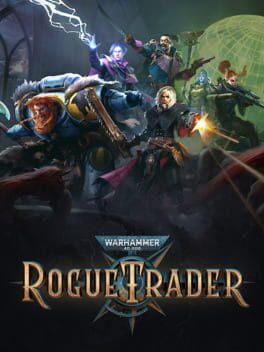
Warhammer 40,000: Rogue Trader
Optimization · Pure Optimization
A 40K turn-based RPG where conviction stacking and ability chaining produce dominant optimization floors.
Portal 2 leans Optimization (Pure Optimization); Warhammer 40,000: Rogue Trader leans Optimization (Pure Optimization).
Portal 2Warhammer 40,000: Rogue Trader
Axis by axis
Execution3 vs 2
Portal 2 leans a little harder on execution, though the gap is small.
Portal 2
Portal placement requires some precision but timing is lenient.
Warhammer 40,000: Rogue Trader
Turn-based grid combat removes all real-time pressure
Reads0 vs 1
Warhammer 40,000: Rogue Trader leans a little harder on reads, though the gap is small.
Portal 2
No opponent; puzzles are static.
Warhammer 40,000: Rogue Trader
Xenos and heretics run fixed scripted AI routines without modelling players
Variance0 vs 5
Warhammer 40,000: Rogue Trader leans clearly harder on variance.
Portal 2
Puzzles are deterministic with no randomness.
Warhammer 40,000: Rogue Trader
Hidden voidship encounter outcomes and momentum RNG create unknowns
Optimization9 vs 10
Warhammer 40,000: Rogue Trader leans a little harder on optimization, though the gap is small.
Portal 2
Solving the puzzle's logic IS the entire game.
Warhammer 40,000: Rogue Trader
Arch-Militant conviction stacking and navigator ability chains reach broken optimization ceilings
A matching score does not mean a matching test. Two games can both sit at 10 on execution and demand completely different things of you - which is why the reasoning above matters more than the number beside it.