Loading game argument
Gamorium's take
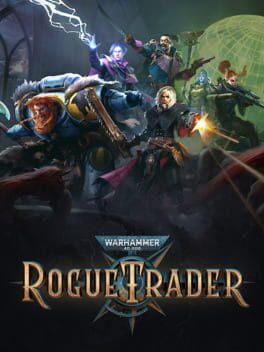
Warhammer 40,000: Rogue Trader
A 40K turn-based RPG where conviction stacking and ability chaining produce dominant optimization floors.
Here's the argument for where this game sits - written by a language model against our framework. Disagree freely.
Match your experience?
the cheat-test profile
The four axes - the argument
Each axis is rated on its own - how far one cheat would trivialize the game here. They don't trade off; low on all four means the game is an experience, not a contest.
Execution
cheat: Aimbot - perfect inputs
2/10Turn-based grid combat removes all real-time pressure
Reads
cheat: Out-predict an adaptive opponent
1/10Xenos and heretics run fixed scripted AI routines without modelling players
Variance
cheat: See what's hidden / map the RNG
5/10Hidden voidship encounter outcomes and momentum RNG create unknowns
Optimization
cheat: A perfect solver / coach
10/10Arch-Militant conviction stacking and navigator ability chains reach broken optimization ceilings
How to read this
Each axis is named by the cheat that would break the game along it. Execution is the hands. Reads is out-thinking an adaptive opponent. Variance is hidden information & RNG. Optimization is the solvable systems layer. A game's region is the top one or two axes.
These four aren't one rating split four ways - they're independent 0-10 questions. A 9 on one axis takes nothing from the others, and a game low on all four isn't missing data: it's telling you there's no skill here to cheat.
The basis is how the majority actually plays this game - not a niche mode or a personal run. For a game with very different modes (a story campaign versus ranked multiplayer), that's the version most people mean.
Compare with
Similar games
see all →Ranked by shared genre first, then by how closely the cheat-test profile matches - a cross-genre tag means a pick matched on skill profile alone.
Baldur's Gate II: Shadows of Amn
Pure Optimization · isometric party RPG
E
R
V
O
Game details
- Released
- 2023
- Developer
- Owlcat Games
- Franchise
- Warhammer 40,000
- Platforms
- Series X|S, Switch 2, PC, PS5, Mac
- Modes
- Single player, Multiplayer, Co-operative
- IGDB critics
- 67/100
- IGDB users
- 88/100
Role-playing (RPG)StrategyTurn-based strategy (TBS)AdventureActionScience fictionWarfare