Building comparison
head to head
Baldur's Gate 3vsKing's Bounty II
Baldur's Gate 3 asks more than King's Bounty II, and the gap is variance.

Baldur's Gate 3
Optimization · Systems & Chaos
A D&D CRPG where build optimization and dice variance dominate every encounter.
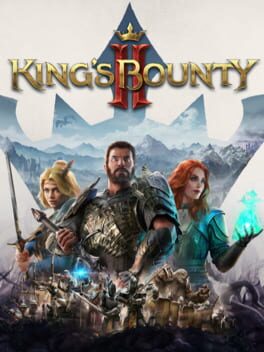
King's Bounty II
Optimization · Systems & Chaos
Composing morale-aware armies and spell loadouts to solve scripted hex-grid encounters.
Baldur's Gate 3 leans Optimization (Systems & Chaos); King's Bounty II leans Optimization (Systems & Chaos).
Baldur's Gate 3King's Bounty II
Axis by axis
Execution1 vs 2
King's Bounty II leans a little harder on execution, though the gap is small.
Baldur's Gate 3
Turn-based; no input dexterity.
King's Bounty II
Turn-based hex grid; no timing inputs
Reads2 vs 1
Baldur's Gate 3 leans a little harder on reads, though the gap is small.
Baldur's Gate 3
Companions/enemies scripted, not adaptive to player modeling.
King's Bounty II
Enemy AI is scripted; unit targeting is fixed-priority
Variance7 vs 5
Baldur's Gate 3 leans clearly harder on variance.
Baldur's Gate 3
Dice rolls, hidden checks, encounter RNG everywhere.
King's Bounty II
Spell proc rates and random loot create variance across encounters
Optimization9 vs 7
Baldur's Gate 3 leans clearly harder on optimization.
Baldur's Gate 3
Builds, party comp, action economy fully solvable.
King's Bounty II
Army composition, leadership allocation, and morale management are planned
A matching score does not mean a matching test. Two games can both sit at 10 on execution and demand completely different things of you - which is why the reasoning above matters more than the number beside it.