Building comparison
head to head
Day of the TentaclevsGrim Fandango
Neither is meaningfully harder - they pose close to the same test. The widest gap is variance, and it is a single point.
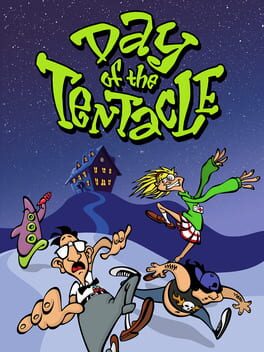
Day of the Tentacle
Optimization · Pure Optimization
A time-travel puzzle game built entirely on deducing cross-era item interactions with no randomness.
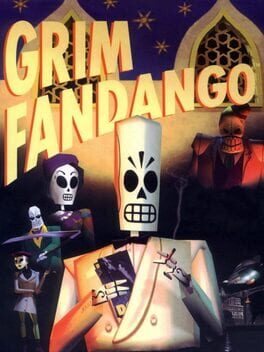
Grim Fandango
Optimization · Pure Optimization
A noir puzzle journey through the Land of the Dead solved by untangling the game's own surreal logic.
Day of the Tentacle leans Optimization (Pure Optimization); Grim Fandango leans Optimization (Pure Optimization).
Day of the TentacleGrim Fandango
Axis by axis
Execution1 vs 1
Same score on execution - which means the number cannot separate them. The difference is in what each one asks of you.
Day of the Tentacle
SCUMM interface eliminates any timing or motor demand
Grim Fandango
Tank controls are awkward but never a skill test
Reads0 vs 0
Same score on reads - which means the number cannot separate them. The difference is in what each one asks of you.
Day of the Tentacle
No opponent; multi-era puzzles are fully scripted
Grim Fandango
All characters follow scripted arcs; nothing adapts to the player
Variance1 vs 2
Grim Fandango leans a little harder on variance, though the gap is small.
Day of the Tentacle
Deterministic world state across three time periods
Grim Fandango
A few timed sequences add minor uncertainty but nothing critical
Optimization9 vs 8
Day of the Tentacle leans a little harder on optimization, though the gap is small.
Day of the Tentacle
Cross-era cause-and-effect chains form a tightly solvable logic puzzle
Grim Fandango
Surreal multi-act puzzle chains demand patient causal reasoning
A matching score does not mean a matching test. Two games can both sit at 10 on execution and demand completely different things of you - which is why the reasoning above matters more than the number beside it.