Building comparison
head to head
Day of the TentaclevsRise of the Golden Idol
Rise of the Golden Idol asks more than Day of the Tentacle, and the gap is variance.
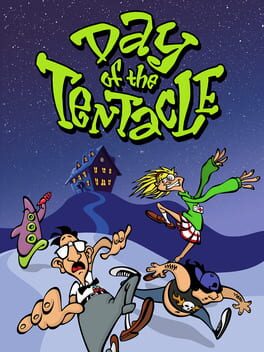
Day of the Tentacle
Optimization · Pure Optimization
A time-travel puzzle game built entirely on deducing cross-era item interactions with no randomness.

Rise of the Golden Idol
Optimization · Pure Optimization
A successor deduction game demanding systematic elimination across interconnected mystery tableaux.
Day of the Tentacle leans Optimization (Pure Optimization); Rise of the Golden Idol leans Optimization (Pure Optimization).
Day of the TentacleRise of the Golden Idol
Axis by axis
Execution1 vs 0
Day of the Tentacle leans a little harder on execution, though the gap is small.
Day of the Tentacle
SCUMM interface eliminates any timing or motor demand
Rise of the Golden Idol
Interface identical to predecessor; no physical demands
Reads0 vs 0
Same score on reads - which means the number cannot separate them. The difference is in what each one asks of you.
Day of the Tentacle
No opponent; multi-era puzzles are fully scripted
Rise of the Golden Idol
Scripted mystery scenes have no adaptive opponent
Variance1 vs 3
Rise of the Golden Idol leans clearly harder on variance.
Day of the Tentacle
Deterministic world state across three time periods
Rise of the Golden Idol
Hidden roles and motives form layered investigative uncertainty
Optimization9 vs 10
Rise of the Golden Idol leans a little harder on optimization, though the gap is small.
Day of the Tentacle
Cross-era cause-and-effect chains form a tightly solvable logic puzzle
Rise of the Golden Idol
Closed-world deduction chain converges to exactly one correct answer per scene
A matching score does not mean a matching test. Two games can both sit at 10 on execution and demand completely different things of you - which is why the reasoning above matters more than the number beside it.