Building comparison
head to head
Persona Q: Shadow of the LabyrinthvsThe Forgotten City
Neither is meaningfully harder - they pose close to the same test. The widest gap is execution, and it is a single point.

Persona Q: Shadow of the Labyrinth
Optimization · Pure Optimization
Etrian-style crossover crawler where party builds and careful map routing carry the labyrinth.
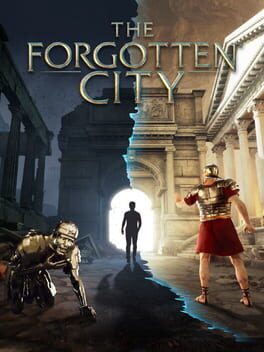
The Forgotten City
Optimization · Pure Optimization
A time-loop Roman mystery where deducing each citizen's secret motive unlocks a nonviolent resolution.
Persona Q: Shadow of the Labyrinth leans Optimization (Pure Optimization); The Forgotten City leans Optimization (Pure Optimization).
Persona Q: Shadow of the LabyrinthThe Forgotten City
Axis by axis
Execution1 vs 2
The Forgotten City leans a little harder on execution, though the gap is small.
Persona Q: Shadow of the Labyrinth
First-person grid crawl; menus only.
The Forgotten City
Combat is technically possible but almost never the optimal path
Reads0 vs 0
Same score on reads - which means the number cannot separate them. The difference is in what each one asks of you.
Persona Q: Shadow of the Labyrinth
FOEs follow fixed patrol patterns.
The Forgotten City
Roman citizens follow scripted roles within the time-loop logic
Variance3 vs 3
Same score on variance - which means the number cannot separate them. The difference is in what each one asks of you.
Persona Q: Shadow of the Labyrinth
Boost procs and drops add minor noise.
The Forgotten City
Hidden motivations and loop-dependent states create investigative uncertainty
Optimization9 vs 8
Persona Q: Shadow of the Labyrinth leans a little harder on optimization, though the gap is small.
Persona Q: Shadow of the Labyrinth
Sub-persona builds, map drawing, and FOE puzzles are solvable.
The Forgotten City
Identifying the correct non-violent resolution path for each citizen is a solvable deduction
A matching score does not mean a matching test. Two games can both sit at 10 on execution and demand completely different things of you - which is why the reasoning above matters more than the number beside it.