Building comparison
head to head
Stranger of Sword CityvsVampire Survivors
Neither is meaningfully harder - they pose close to the same test. The widest gap is variance, and it is a single point.
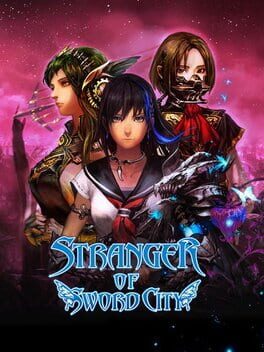
Stranger of Sword City
Optimization · Pure Optimization
Party-build optimisation and risk management in a punishing turn-based dungeon crawl.

Vampire Survivors
Optimization · Pure Optimization
An auto-attacker where picking the right weapon evolutions wins by itself.
Stranger of Sword City leans Optimization (Pure Optimization); Vampire Survivors leans Optimization (Pure Optimization).
Stranger of Sword CityVampire Survivors
Axis by axis
Execution1 vs 1
Same score on execution - which means the number cannot separate them. The difference is in what each one asks of you.
Stranger of Sword City
Turn-based menus carry no physical demand
Vampire Survivors
Movement is trivial; no aim or precision required.
Reads0 vs 0
Same score on reads - which means the number cannot separate them. The difference is in what each one asks of you.
Stranger of Sword City
Monsters follow fixed logic with no adaptation
Vampire Survivors
Enemies follow fixed spawn scripts; no adaptive opponent.
Variance5 vs 4
Stranger of Sword City leans a little harder on variance, though the gap is small.
Stranger of Sword City
Encounter rolls, drops and permadeath risk shape runs
Vampire Survivors
Level-up offerings and pickup drops are randomized.
Optimization8 vs 9
Vampire Survivors leans a little harder on optimization, though the gap is small.
Stranger of Sword City
Party builds, class changes and risk management are the game
Vampire Survivors
Evolution paths and weapon combinations fully solve the run.
A matching score does not mean a matching test. Two games can both sit at 10 on execution and demand completely different things of you - which is why the reasoning above matters more than the number beside it.