Building comparison
head to head
Super Mario WorldvsTeenage Mutant Ninja Turtles III: The Manhattan Project
Neither is meaningfully harder - they pose close to the same test. The widest gap is optimization, and it is a single point.

Super Mario World
Execution · Pure Mechanics
Precise jump execution across fixed levels with secrets to memorise.
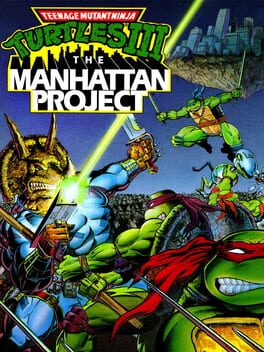
Teenage Mutant Ninja Turtles III: The Manhattan Project
Execution · Pure Mechanics
A classic beat-em-up demanding execution against scripted enemy waves.
Super Mario World leans Execution (Pure Mechanics); Teenage Mutant Ninja Turtles III: The Manhattan Project leans Execution (Pure Mechanics).
Super Mario WorldTeenage Mutant Ninja Turtles III: The Manhattan Project
Axis by axis
Execution7 vs 7
Same score on execution - which means the number cannot separate them. The difference is in what each one asks of you.
Super Mario World
Perfect inputs trivialise every jump, spin and cape flight
Teenage Mutant Ninja Turtles III: The Manhattan Project
beat-em-up timing and enemy juggling
Reads0 vs 0
Same score on reads - which means the number cannot separate them. The difference is in what each one asks of you.
Super Mario World
Scripted Koopas adapt to nothing
Teenage Mutant Ninja Turtles III: The Manhattan Project
enemies run simple fixed scripts
Variance1 vs 1
Same score on variance - which means the number cannot separate them. The difference is in what each one asks of you.
Super Mario World
Levels are fixed; nothing hidden survives one playthrough
Teenage Mutant Ninja Turtles III: The Manhattan Project
minor enemy spawn randomness
Optimization4 vs 3
Super Mario World leans a little harder on optimization, though the gap is small.
Super Mario World
Secret exits and route knowledge add a modest solvable layer
Teenage Mutant Ninja Turtles III: The Manhattan Project
character choice and route memorization
A matching score does not mean a matching test. Two games can both sit at 10 on execution and demand completely different things of you - which is why the reasoning above matters more than the number beside it.
full breakdown
Super Mario World →
full breakdown
Teenage Mutant Ninja Turtles III: The Manhattan Project →
Related comparisons
Half-Life 2 vs Super Mario WorldHalf-Life 2 vs Teenage Mutant Ninja Turtles III: The Manhattan ProjectDOOM (2016) vs Super Mario WorldDOOM (2016) vs Teenage Mutant Ninja Turtles III: The Manhattan ProjectSuper Mario Odyssey vs Super Mario WorldSuper Mario Odyssey vs Teenage Mutant Ninja Turtles III: The Manhattan Project