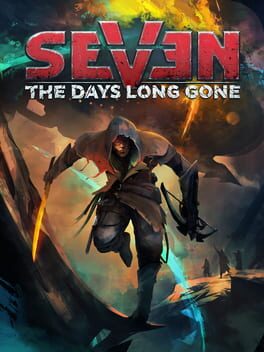
games like
Seven: The Days Long Gone
Seven: The Days Long Gone leans Optimization (Pure Optimization). Below: catalogued games with the closest cheat-test profile, and exactly where each one differs.
Matched first against: Role-playing (RPG) - then ranked by cheat-test profile.
12 games like Seven: The Days Long Gone
A cross-genre tag below means that pick didn't share a genre - it filled a slot on cheat-test profile alone.
Both lean on execution about the same (4 vs 4). Otherwise the profiles match closely.
full comparison →
Both lean on execution about the same (4 vs 4). Otherwise the profiles match closely.
full comparison →
Both lean on reads about the same (0 vs 0). Biggest difference: execution (4 vs 3) - Combat is forgiving; aim and timing rarely punish you.
full comparison →
Both lean on execution about the same (4 vs 4). Biggest difference: reads (0 vs 1) - Scripted enemy AI
full comparison →
Both lean on execution about the same (4 vs 4). Biggest difference: optimization (7 vs 8) - Gear progression and arena prep solve every boss.
full comparison →
Both lean on variance about the same (3 vs 3). Biggest difference: execution (4 vs 3) - Balance and traversal inputs, modest demands.
full comparison →
Both lean on execution about the same (4 vs 4). Biggest difference: reads (0 vs 1) - Scripted bosses
full comparison →
Both lean on execution about the same (4 vs 4). Biggest difference: reads (0 vs 1) - Process enemies follow scripts.
full comparison →
Both lean on variance about the same (3 vs 3). Biggest difference: execution (4 vs 5) - Shooter and piloting inputs
full comparison →
Both lean on reads about the same (0 vs 0). Biggest difference: execution (4 vs 5) - Dodge-and-stamina melee combat with modest demands
full comparison →
Both lean on execution about the same (4 vs 4). Biggest difference: variance (3 vs 2) - World seed and biome layout introduce mild randomness.
full comparison →
Both lean on reads about the same (0 vs 0). Biggest difference: execution (4 vs 3) - Rhythm-click combat needs only loose timing
full comparison →Game details
- Released
- 2017
- Developer
- Fool's Theory
- Platforms
- PC
- Modes
- Single player
- IGDB critics
- 63/100
- IGDB users
- 67/100