Building comparison
head to head
Secret NeighborvsTabletop Simulator
Secret Neighbor asks more than Tabletop Simulator, and the gap is execution.
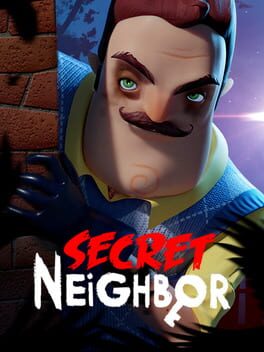
Secret Neighbor
Reads · Bluff & Deduction
Kids loot a house for basement keys while one of them is secretly the Neighbor in disguise.
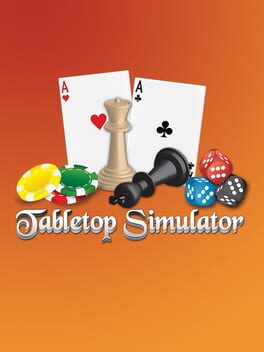
Tabletop Simulator
Reads · Bluff & Deduction
A physics sandbox whose actual skill test is whatever board game you load into it.
Secret Neighbor leans Reads (Bluff & Deduction); Tabletop Simulator leans Reads (Bluff & Deduction).
Secret NeighborTabletop Simulator
Axis by axis
Execution4 vs 1
Secret Neighbor leans clearly harder on execution.
Secret Neighbor
Chases, juking, and grabs need real motor skill.
Tabletop Simulator
Fiddly physics manipulation, never a skill ceiling
Reads7 vs 4
Secret Neighbor leans clearly harder on reads.
Secret Neighbor
The disguised Neighbor wins by out-modeling suspicious kids.
Tabletop Simulator
Depends entirely on the tabletop game played with humans
Variance6 vs 4
Secret Neighbor leans clearly harder on variance.
Secret Neighbor
Hidden Neighbor identity and random key spawns obscure information.
Tabletop Simulator
Dice and shuffled decks supply whatever randomness the game has
Optimization4 vs 3
Secret Neighbor leans a little harder on optimization, though the gap is small.
Secret Neighbor
House layouts and key routes are mappable with play.
Tabletop Simulator
Strategy lives in the hosted game, not the simulator
A matching score does not mean a matching test. Two games can both sit at 10 on execution and demand completely different things of you - which is why the reasoning above matters more than the number beside it.