Building comparison
head to head
DivekickvsFirst Class Trouble
First Class Trouble asks more than Divekick, and the gap is variance.
Divekick
Reads · Pure Mind Games
A two-button parody fighter that strips fighting games down to pure one-hit-kill spacing reads.
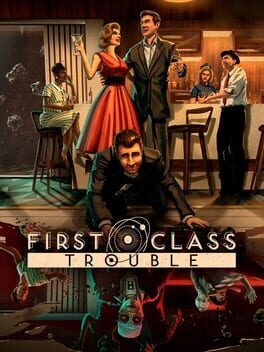
First Class Trouble
Reads · Pure Mind Games
Passengers on a luxury starliner must shut down its AI while disguised androids talk them into airlocks.
Divekick leans Reads (Pure Mind Games); First Class Trouble leans Reads (Pure Mind Games).
DivekickFirst Class Trouble
Axis by axis
Execution2 vs 2
Same score on execution - which means the number cannot separate them. The difference is in what each one asks of you.
Divekick
Two buttons, one-hit kills; almost no physical ceiling.
First Class Trouble
Light physical scuffles; proximity voice does the real work.
Reads9 vs 9
Same score on reads - which means the number cannot separate them. The difference is in what each one asks of you.
Divekick
Pure spacing yomi against an adapting human is the entire game.
First Class Trouble
Persuading and reading live human voices is the whole contest.
Variance1 vs 6
First Class Trouble leans clearly harder on variance.
Divekick
Fully deterministic.
First Class Trouble
Hidden Personoid identities and random events mask intent.
Optimization3 vs 3
Same score on optimization - which means the number cannot separate them. The difference is in what each one asks of you.
Divekick
Character angles and gem choices are quickly mapped.
First Class Trouble
Ship objectives and oxygen economy are simple learnable systems.
A matching score does not mean a matching test. Two games can both sit at 10 on execution and demand completely different things of you - which is why the reasoning above matters more than the number beside it.