Loading game argument
Gamorium's take
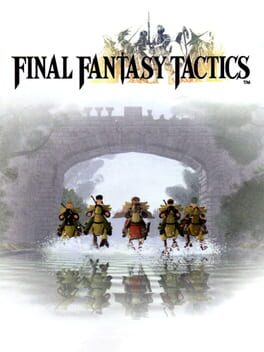
Final Fantasy Tactics
A deep optimization puzzle solved through job combinations and CT-manipulation on fixed maps.
Here's the argument for where this game sits - written by a language model against our framework. Disagree freely.
Match your experience?
the cheat-test profile
The four axes - the argument
Each axis is rated on its own - how far one cheat would trivialize the game here. They don't trade off; low on all four means the game is an experience, not a contest.
Execution
cheat: Aimbot - perfect inputs
2/10No twitch; CT-tick positioning demands spatial planning only
Reads
cheat: Out-predict an adaptive opponent
1/10CPU job/action selection is fixed and fully predictable
Variance
cheat: See what's hidden / map the RNG
4/10Random drops and some proc rates exist but rarely swing outcomes
Optimization
cheat: A perfect solver / coach
10/10Job mastery, ability stacking, and CT manipulation are near-perfectly solvable
How to read this
Each axis is named by the cheat that would break the game along it. Execution is the hands. Reads is out-thinking an adaptive opponent. Variance is hidden information & RNG. Optimization is the solvable systems layer. A game's region is the top one or two axes.
These four aren't one rating split four ways - they're independent 0-10 questions. A 9 on one axis takes nothing from the others, and a game low on all four isn't missing data: it's telling you there's no skill here to cheat.
The basis is how the majority actually plays this game - not a niche mode or a personal run. For a game with very different modes (a story campaign versus ranked multiplayer), that's the version most people mean.
Compare with
Similar games
see all →Ranked by shared genre first, then by how closely the cheat-test profile matches - a cross-genre tag means a pick matched on skill profile alone.
Pillars of Eternity II: Deadfire
Pure Optimization · isometric party RPG
E
R
V
O
Baldur's Gate II: Shadows of Amn
Pure Optimization · isometric party RPG
E
R
V
O
Game details
- Released
- 1997
- Developer
- Square Product Development Division 4
- Franchise
- Final Fantasy
- Platforms
- PS3, PS1, PSP
- Modes
- Single player
- IGDB users
- 86/100
Role-playing (RPG)Turn-based strategy (TBS)TacticalFantasyThrillerHistorical